If you’ve heard anglers debate the Mop fly — or watched someone quietly out-fish everyone around them with one — you’ve probably wondered:
What is the Mop fly, and why does it work so well?
The Mop fly is a simple but highly effective trout nymph made from microfiber strands tied to a jig hook. Originally popularized in the late 1990s, it imitates soft-bodied food sources and triggers strikes through movement and profile rather than precise hatch matching.
How to Tie the Mop Fly (Step-by-Step Tutorial)
Tying the Mop fly is simple and effective. In this video, I walk through hook selection, bead choice, Mop material placement, and optional dubbing to create a fish-catching trout pattern.
In this guide, you’ll learn:
What the Mop fly imitates
How to tie it
The best colors to use
And how to fish it effectively
Fly fishing is rooted in tradition. It’s often called “The Quiet Sport,” built on matching hatches and imitating nature as closely as possible.
Then along came the Mop fly.
Bright. Soft. Made from microfiber. And wildly effective.
Did it disrupt fly fishing? Not exactly. But it did create a ripple — and for some anglers, a full-blown controversy.
Even for me.
In 2015, just as the pattern was gaining momentum, I recorded a Mop fly tying video. I hesitated before publishing it. I knew what would happen.
And I was right.

Mop material comes from all over, including these car wash mitts in the perfect shade of chartreuse!
What is the Mop Fly?
As per the Google search engine, the Mop fly was invented by Jim Estes in the late 90’s. Yet similar versions of this fly have been fished for years prior. In my home state of Pennsylvania, popular chenille-based flies include the Green Weenie and Honey Bug. The Mop is like a 2.0 version of those, its thicker material held together with a multi-strand core. Sticking with that, where did fly tiers first find Mop fly tying material?
Examining the name, some early products featuring Mop fly material were, you guessed it, mops! At automotive repair stores, there were cleaning mitts that consisted of little mop “fingers,” perfect for spreading soap all over your vehicle. I found sets of “mop slippers,” marketed that you could wear them around the house to clean. Since the color combinations were perfect, I ordered some; you can imagine my surprise when I got home from work and found my wife Heather jokingly wearing the light pink ones around our kitchen!
To tie with that material, simply cut away the individual “fingers” from the base, then lash onto a hook. Simple enough, but why are Mop flies so effective? Since the material is dense, it drifts and falls through the water column like an open parachute; its path is erratic and unpredictable, something fish respond to. Don’t forget that it has tons of individual fibers, which means it may take longer to sink. If you tie your own flies, be sure to add tungsten beads to the hooks. Prefer to buy Mop flies? Get them at my favorite online fly shop: Mop Flies

Can a fly this simple disrupt tradition? Not quite — but the Mop fly definitely stirred the pot.
Mop Fly Recipe:
Hook: #12 jig hook
Bead: Silver or copper 3.8 mm tungsten slotted bead
Thread: Black 12/0 Semperfli Nano Silk
Adhesive: Super glue
Body: Mop material
Thorax: Black Peacock dubbing
How to Tie the Mop Fly (Durable Version)
Start by laying a smooth thread base along the hook shank.
Apply a thin layer of super glue over the thread base.
Secure the Mop material to the shank and bind it down firmly.
Wind thread through the Mop fibers to lock it in place.
Add black peacock dubbing between the bead and Mop body.
Brush a small amount of super glue onto the thread wraps.
Whip finish and trim.
You now have a durable Mop fly that will withstand multiple fish.
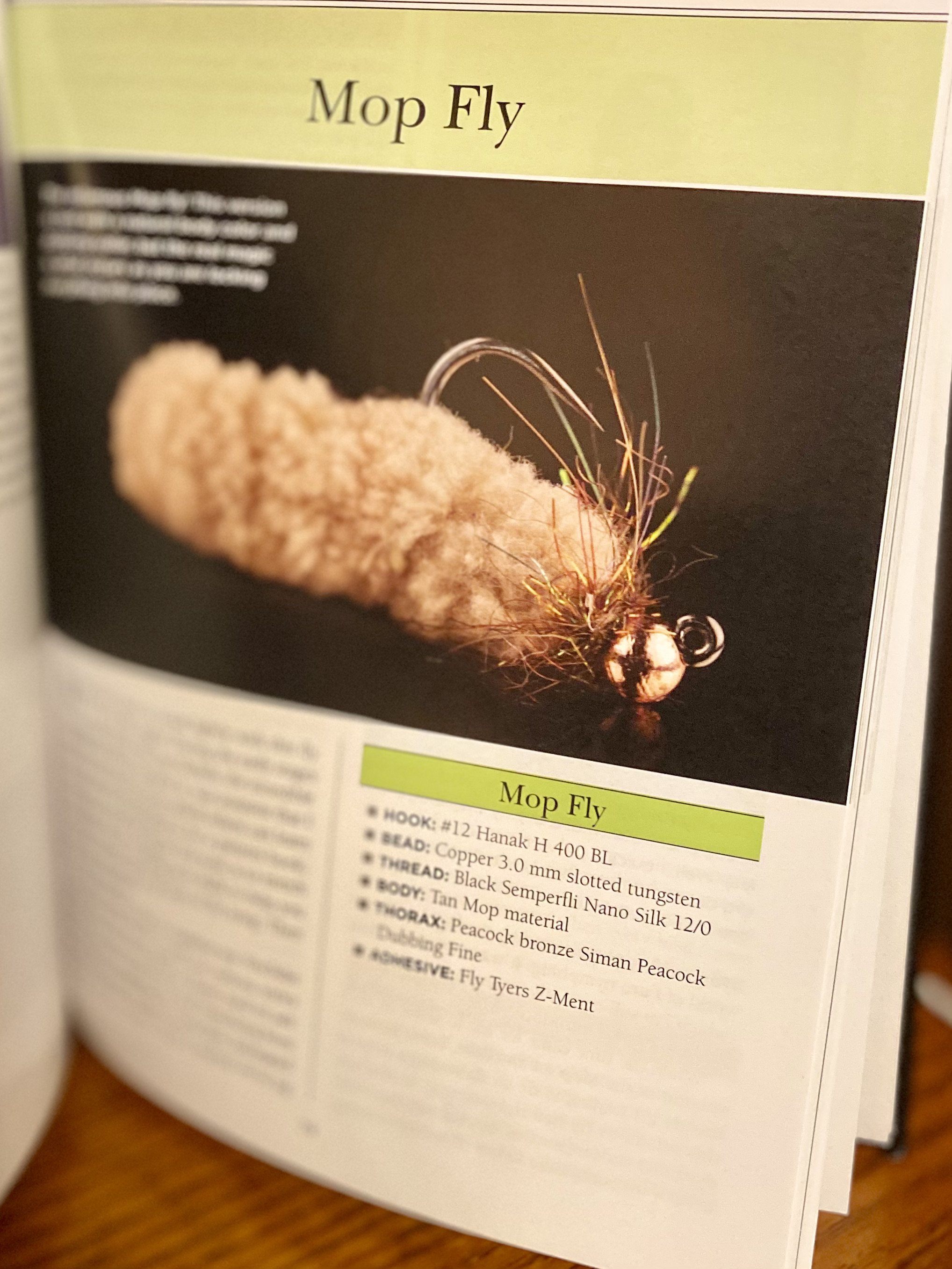
My book, Fly Tying for Everyone, was the first to feature the Mop Fly! I am proud of that honor, especially knowing how many fish this fly has accounted for over the years. Into fly tying? Buy an autographed copy of my book: HERE
Favorite Colors
Now the toughest decision, what color Mop fly should you use? Favorite colors are based on the species I’m chasing, but these three are always in my fly box:
1. Chartreuse - The go-to color for many fly fishers, as it causes fish to react once it enters the water. Stocked trout (and bass) go crazy for chartreuse!
2. Tan - This muted color won’t spook many fish since it looks natural when drifting. Opt for tan, especially when targeting wild trout.
3. Pale Pink - If I’m chasing steelhead, I go for this shade, which tends to draw a reaction without scaring the steelhead from their lie.
Those colors cover many situations and species, but find which ones trigger a reaction from the fish you’re targeting. If I’m chasing bass on the fly, I love throwing black or olive Mop flies. Fly fishing in Iceland, I use dark brown, which represents caddisfly cases. Panfish seem to eat every color I try! The key is finding a color that you have confidence in, then fish away.
In some cases, it’s easy to believe that a certain color may represent an aquatic insect like a cranefly larva or cased caddis. Don’t overthink things, the Mop is a big meal that makes fish want to say, “Yes, please!”
Fishing Techniques
The Mop fly is most effective when fished deep and slow.
Fish it under an indicator, on a Euro nymph setup, or using a high-stick presentation. Begin by dead-drifting the fly near the bottom, allowing it to move naturally with the current — just like a dislodged food source.
During the drift, occasionally lift your rod tip slightly. That subtle jigging motion causes the Mop to rise in the water column, often triggering reaction strikes from trout that don’t want their meal to escape. At the end of the drift, let the fly swing before recasting — many strikes occur during that lift or swing.
Fishing the Mop in a Two-Fly Rig
Another highly effective approach is pairing the Mop with a smaller nymph.
Allow the Mop to “slink” along the substrate, maintaining bottom contact. Its bulk and weight help slow the drift of the trailing fly, keeping both flies in the strike zone longer.
Some trout will take the Mop. Many will choose the smaller dropper, which often better matches their typical forage. In this setup, the Mop serves both as an attractor and as a stabilizing anchor for your rig.
If you’d like a copy of my two-nymph setup, email me at tcammisa@gmail.com

Even Arctic char love the Mop! This gorgeous fish was caught when fly fishing in Iceland.
Since the initial Mop fly craze, most fly fishers have come to appreciate it for one simple reason: it catches fish.
The first time I fished a pale pink Mop for steelhead in slow water, two fish charged it on consecutive drifts. I nearly broke one off because I was so surprised by the reaction. As the saying goes, “Can’t stop the Mop.”
The Mop fly isn’t for everyone — and that’s okay. But when trout or steelhead need a trigger, it’s hard to ignore a pattern that consistently produces.
If you fish the Mop, share your favorite colors and setups in the comments below. And if you avoid it, I’m curious — what’s your reason?
Frequently Asked Questions
What does the Mop fly imitate?
The Mop fly doesn’t imitate one specific insect. Its microfiber body resembles soft-bodied food sources like crane fly larvae, cased caddis, or other aquatic invertebrates, triggering reaction strikes from trout.
When is the Mop fly most effective?
The Mop fly excels in higher water, stained conditions, and when trout are feeding opportunistically rather than matching a specific hatch.
Is the Mop fly considered controversial?
Yes. Some traditional anglers dislike its unconventional appearance, but its effectiveness has earned it a place in many fly boxes.
Want to go deeper?

The Best Euro Nymph Flies for Consistent Results
A practical breakdown of the most effective Euro nymph patterns — the flies I rely on when precision, depth, and contact matter most.
Fly Tying Guide
A structured hub of step-by-step tutorials, materials, and techniques to improve your tying.