
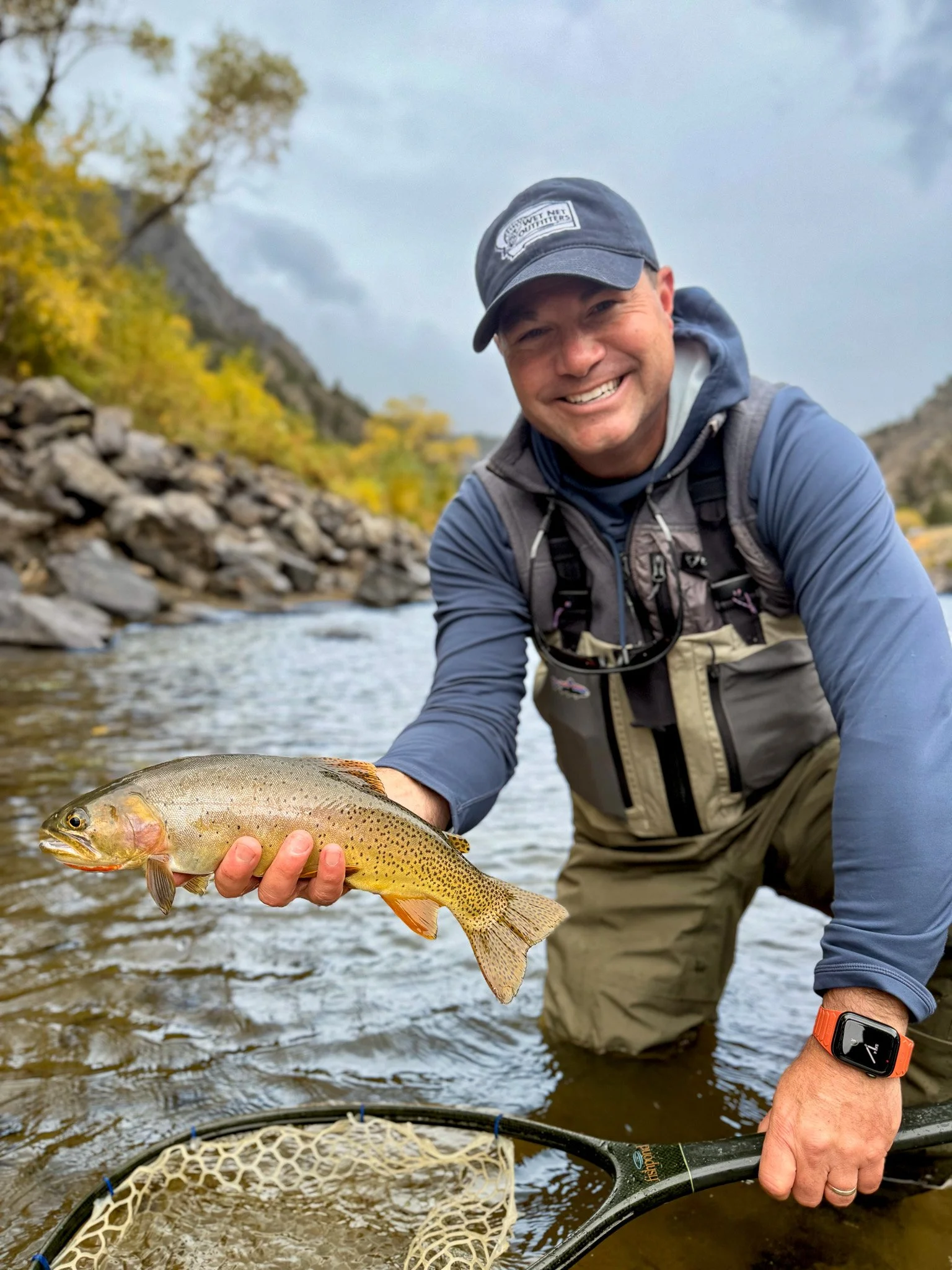
I used to think most trout lived in slow, deep pools.
So that’s where I spent most of my time fishing.
But over the years, that changed.
Especially in the spring—when higher flows and increased food movement push fish into very different types of water.
Do I still fish pools? Absolutely, especially during colder periods of the year.
But if you’re only fishing the obvious spots, you’re probably walking past a lot of fish.
What Most Anglers Miss
Most anglers focus on what looks “fishy.”
Deep, slow, calm water.
And yes—there are fish there.
But more often than not, trout are holding in places that give them three things at once:
Access to food
Protection from current
A short, efficient feeding lane
Once you start looking at the river through that lens, everything changes.
Before You keep reading…
Take 10 seconds and think about this:
Be honest — Where do you spend most of your time?
Slow pools…or edges and transitions?
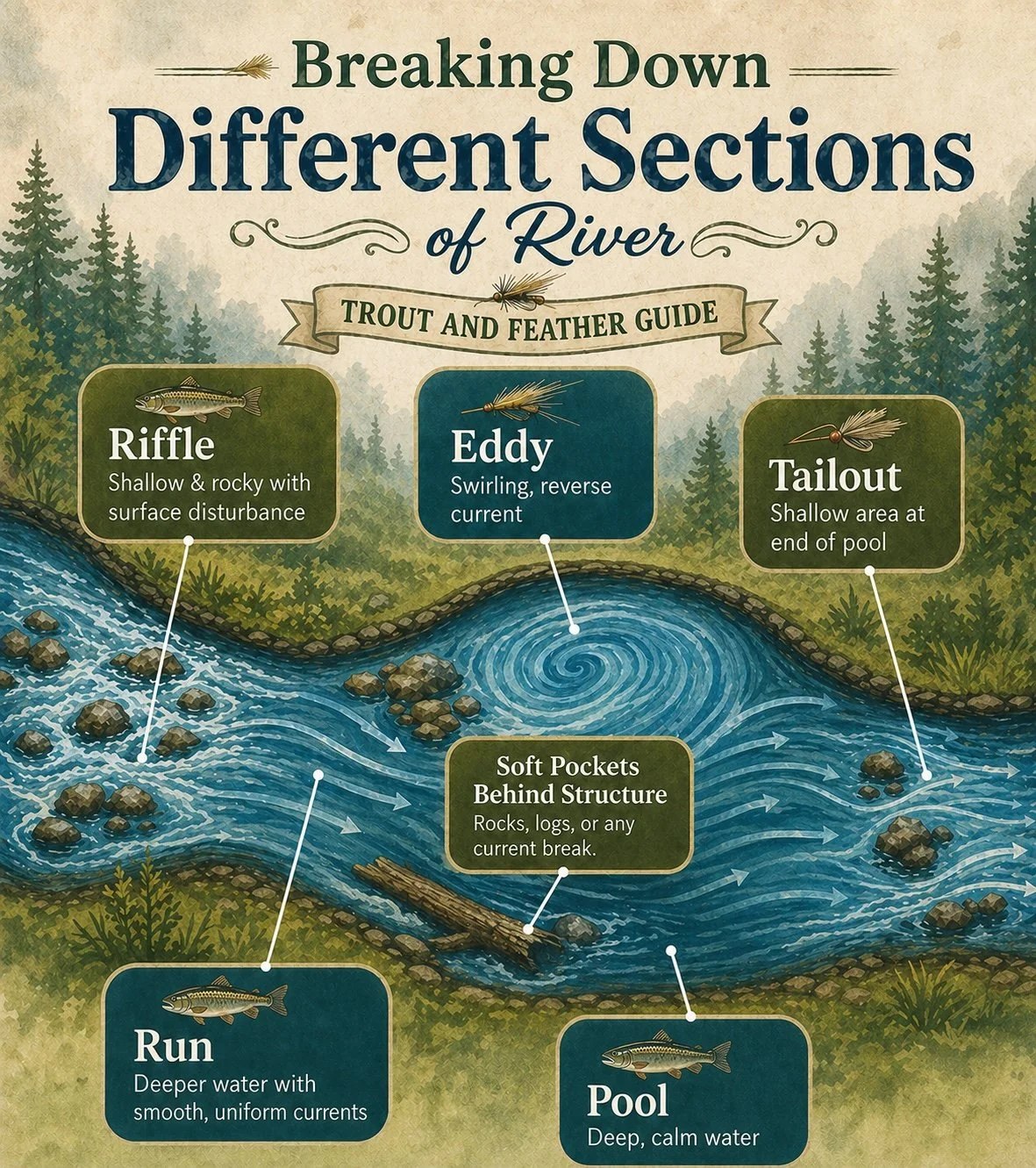
I used to fish types of water.
Now I fish holding water—places that give trout everything they need to survive.
The 4 Places I Fish Most in the Spring
These are the areas I focus on again and again—especially when flows are up and fish are actively feeding.
1. Current Seams
Where fast and slow water meet.
These are natural feeding lanes. Food gets pushed through the faster current, while trout can sit just off to the side in softer water and move a few inches to eat.
Best when: flows are elevated and food is moving consistently.
2. Riffle Edges
Not the middle—the edges.
Riffles are full of oxygen and food, but the fastest water can be inefficient for trout to hold in.
The edges give them a perfect balance:
Oxygen-rich water
Steady food supply
Reduced energy expenditure
This is one of the most consistent areas to find active fish in the spring.
3. Soft Pockets Behind Structure
Rocks, logs, or any break in the current.
These create small “rest areas” where trout can sit comfortably while food drifts right to them.
These spots are often overlooked—and incredibly consistent, especially in higher water.
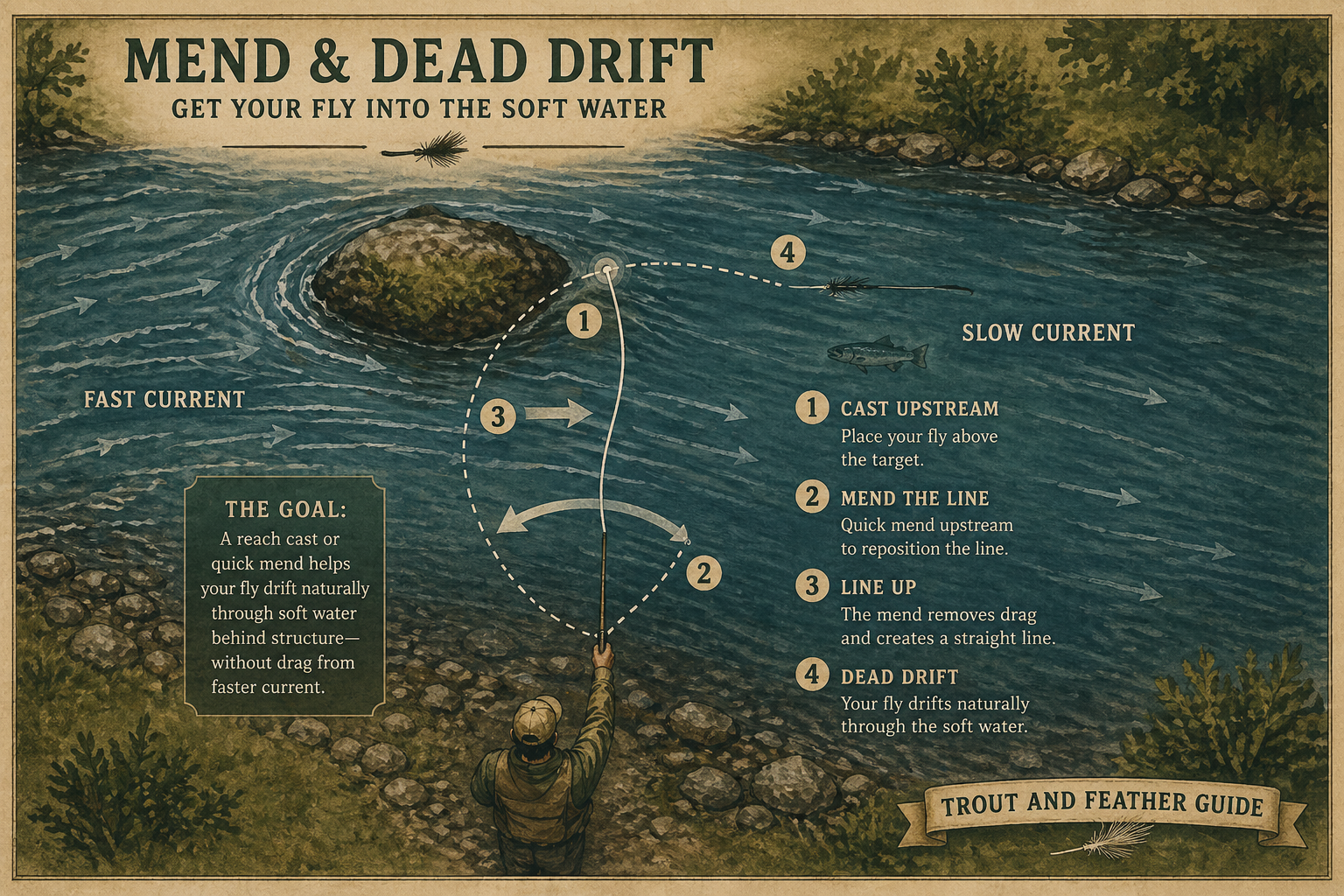
4. Transition Water (Riffle → Run → Pool)
Trout don’t think in terms of “riffle” or “pool”, they key in on change.
Anytime water speed, depth, or structure shifts—you have an opportunity.
These transition zones often concentrate fish because they combine multiple advantages in one place.
If You Only Take One Thing From This
👉 Fish transitions and edges—not just the obvious slow water.
That small shift can change everything.
Where I’d Start (If I Only Had 30 Minutes)
If I walked up to a new stretch of water with limited time, here’s how I’d approach it:
Start with current seams
Move to riffle edges
Then target structure and soft pockets
These areas check all three boxes: food, protection, and efficiency. Will I still fish pools? Absolutely, but there are lots of locations to focus on when targeting trout.
In these types of water, I almost always rely on nymphs that get down quickly and maintain contact—like a Pheasant Tail, France Fly, or Blowtorch-style pattern. 👉 Best Nymphs page
Final Thoughts
Reading water isn’t about memorizing river types.
It’s about understanding why trout choose to hold where they do.
Once you see that, you’ll start spotting fishy water everywhere—not just in the obvious places.
And more importantly…
You’ll stop walking past fish.
Most anglers fish what looks good.
The best anglers fish where trout actually live.
Struggling to get consistent takes?
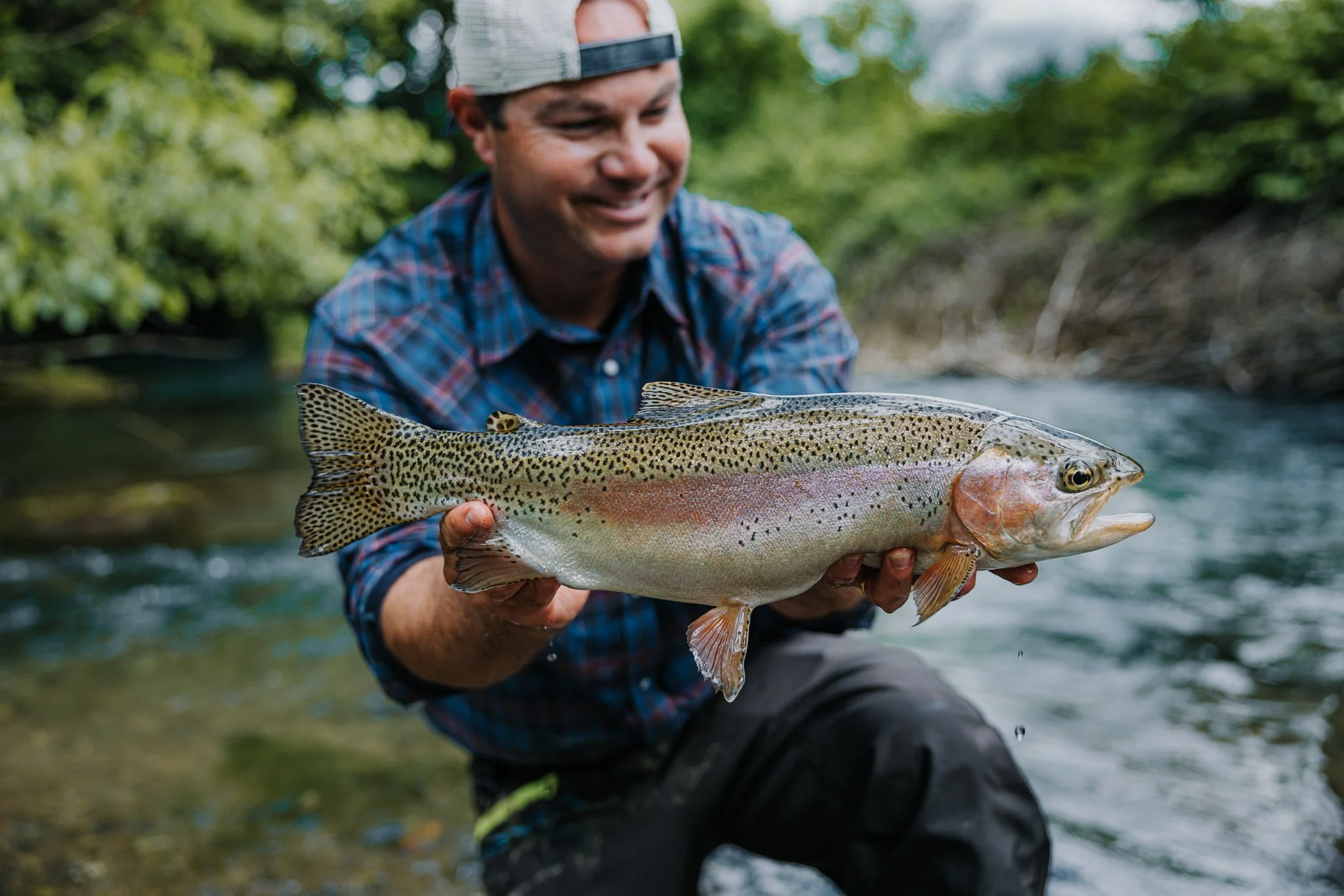
The Nymphs I Trust for Consistent Results
The flies I rely on when everything has to be right.