
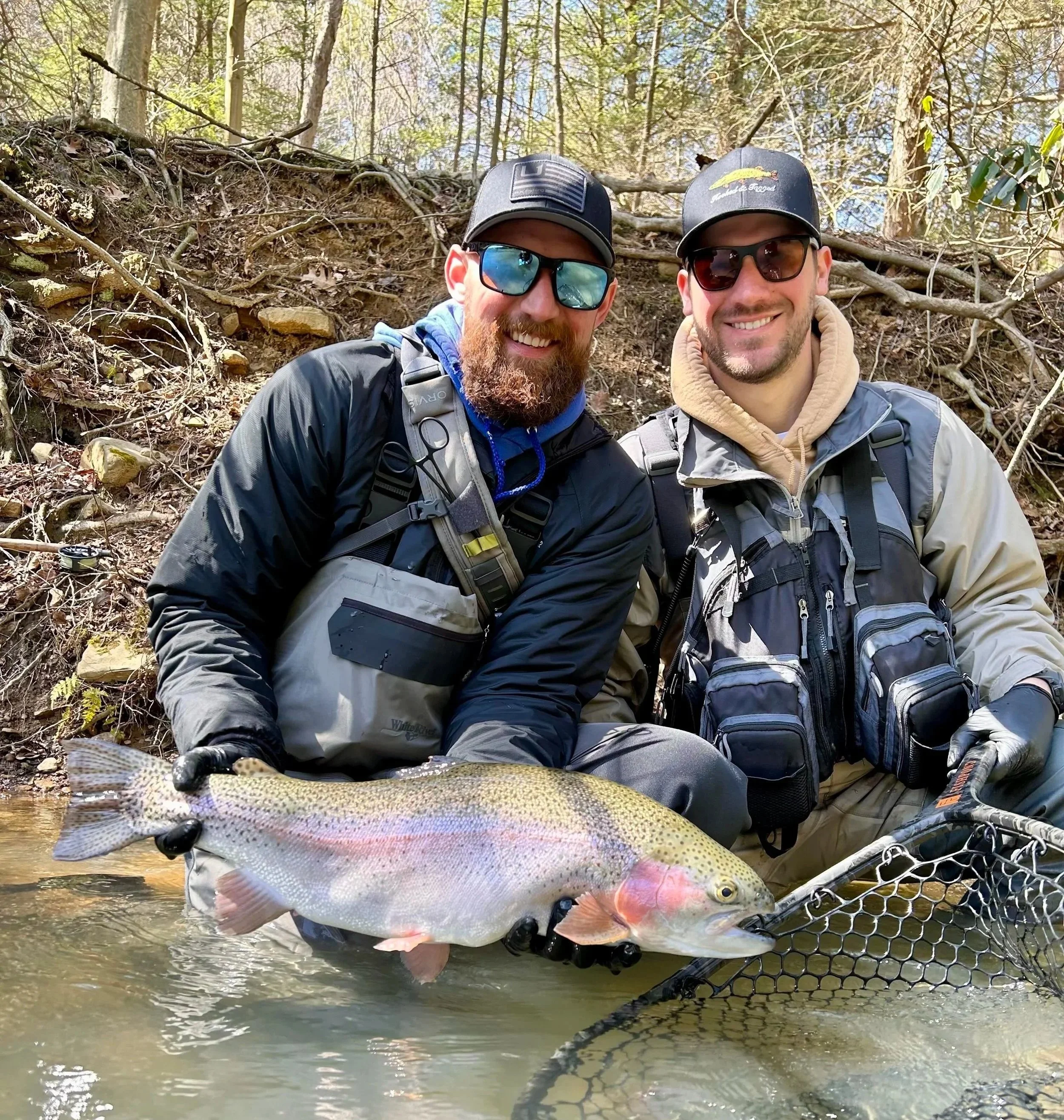
Success and failure in fly fishing can be measured in many ways, but most anglers measure a day by how many fish they caught. When the fishing is good, it’s easy to forget what went right because it gets overshadowed by the almighty “fish count.” When things start falling apart, it’s easy to feel overwhelmed. Fly fishing is meant to be an enjoyable way to spend time outdoors, and sometimes a smaller adjustment than you’d expect can turn things around.
After spending countless hours watching anglers of all skill levels in a wide range of conditions, I’ve noticed a few mistakes that come up again and again. I’m sure we’ve all made some of them, whether we realized it or not. The next time you’re on the water, I’d challenge you to pay attention to what’s helping and what’s hurting you. Here are five things to watch for.
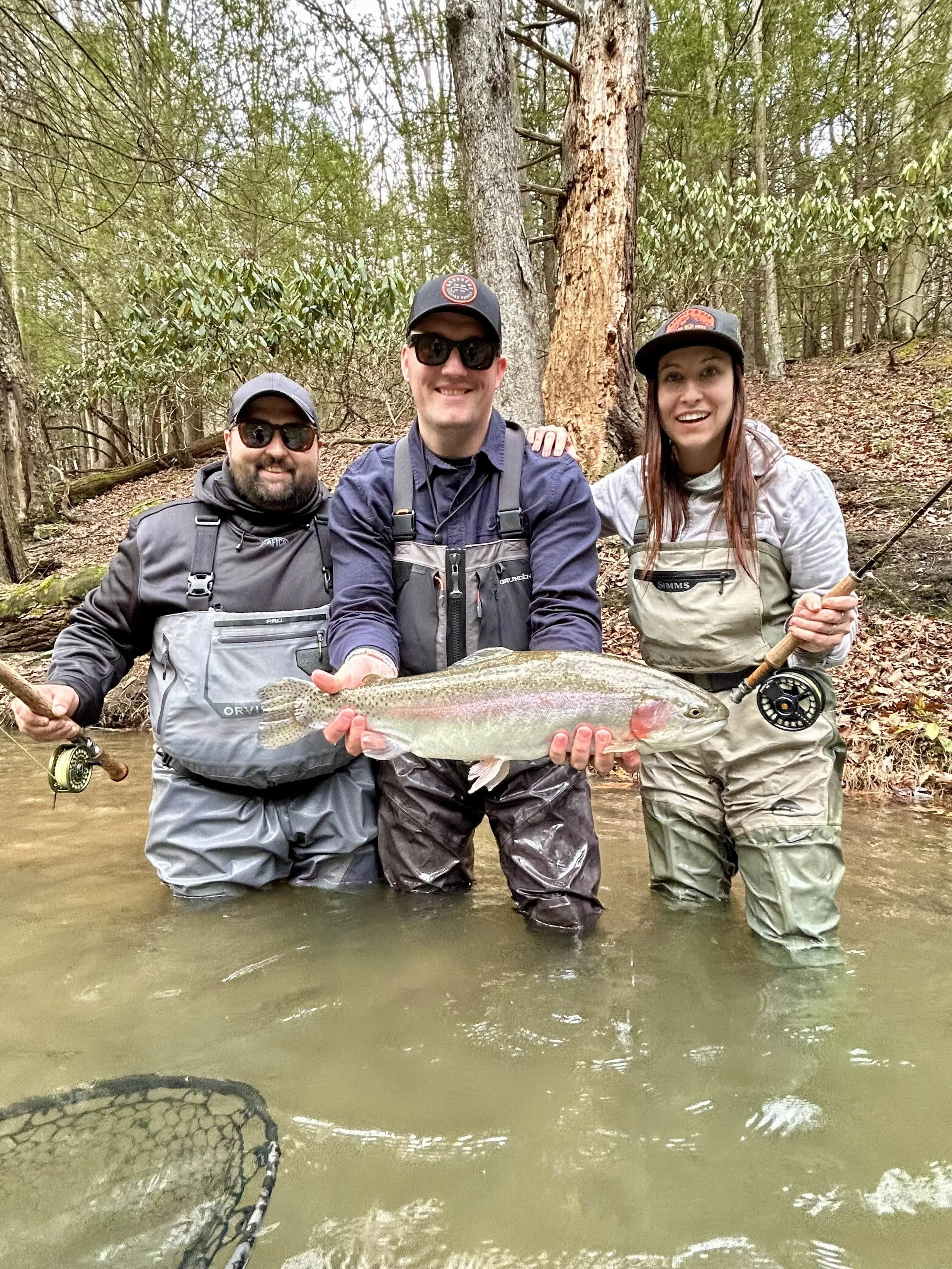
Sometimes you just need great company to reel in the biggest ones!
1. Spooking Fish With Your Fly Line
I don’t mean this in the sense of not landing your presentation where you intended. Actually, I mean this as it relates to before and after you land your fly.
Even when the water is stained, but specifically when the water is clear; false casts create a multitude of problems. If your cast is “smacking” the water even once before you lay your final cast, you are alerting all fish of your presence and likely putting them on high alert, or even causing them to turn from active to passive or negative. Make the extra effort to be methodical in your cast, keep a firm form and focus on a complete follow through with a high ending position to allow for a gentle landing and smooth transition into drift.
Furthermore on this point, if mending is required, ripping the line up off the water to throw it can create the same issue. When mending, gently lift your line before mending, reducing the amount of water tension that needs to be broken.
At the end of your drift, let your fly swing toward the bank into water you’ve already fished. Then lift your line gently for the next cast. Pulling your line or indicator off the water too abruptly can spook fish in water you haven’t covered yet.
2. Fishing the Bottom First
This relates to all species of fish. More rare than common, are fish all staged on the bottom. Many anglers choose to immediately present their flies as close to the bottom as possible. Where this “success” can lead to a “failure” is when you catch a fish with a deep presentation that spooks fish holding above them that you didn’t realize were there. In an even worse instance, if you snag immediately, you may have caused the spot to be unproductive for some amount of time.
Start your presentation high in the water column, and slowly progress deeper until you have fished the entire column. You can usually pick off fish sitting high in the column first, that usually do not spook the fish below them. You may also get the most active low-lying fish to come up to feed, a true success! As you then progress deeper you will encounter more opportunities to increase your fish count.
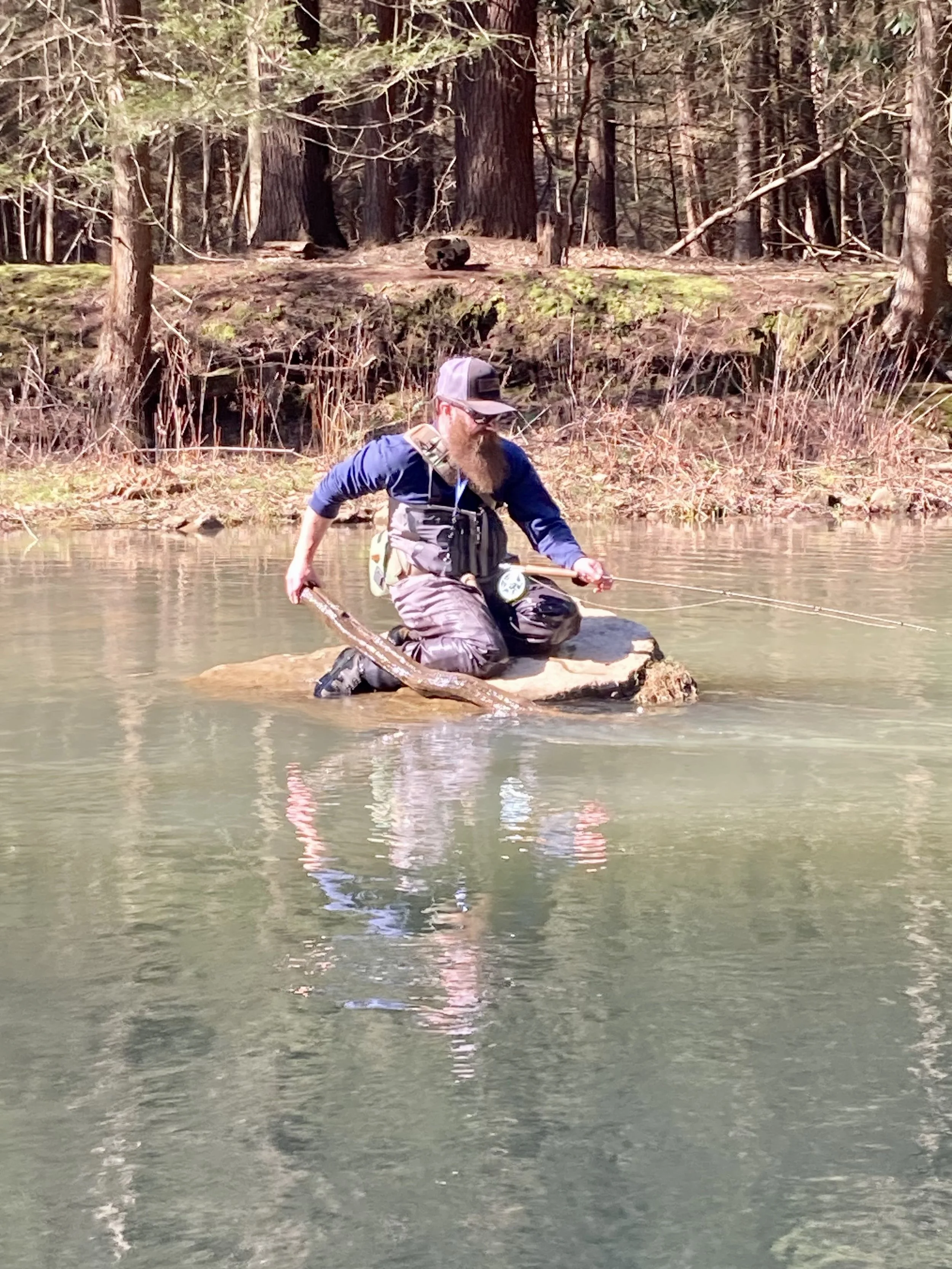
Sometimes the guide earns their day’s wage!
3. Starting With Too Much Weight
A tungsten bead is heavier than a brass bead of the same size, so your fly can sink faster than you expect.
I usually start with a slightly lighter fly and go heavier if I need more depth. A lighter fly can drift more naturally and helps me avoid fishing below the fish or snagging bottom.
4. Losing Tension While Fighting a Fish
Once a fish is hooked I see 2 things occur, sometimes in tandem and other times separately, but ultimately both setting oneself up for lost fish. The easy one, do not move your feet (significantly). Anglers love to walk around or walk to the fish and this creates ample opportunities for you to lose the tension necessary to keep a fish pinned. Focus on fighting the fish and not your balance and maneuverability.
The other is the angle at which a fish is fought. It is fairly common knowledge to set the hook with a low, downstream angle to ensure the highest percentage of hookup ratio, but after that it is easy to forget the angles of the rest of the fight. In an ideal situation maintain your low angle under tension, swinging the fish through the current and only lifting when you are ready to net the fish.
I also challenge you to incorporate more angles into the fight. When a fish is changing directions on you, your rod angle should also be slightly changing to keep pressure opposite the direction the fish wants to pull. Next time you hook a medium sized fish in slower water, give this a try, always try to keep the fish off-balance.
5. Rushing Your Drifts and Changing Flies Too Often
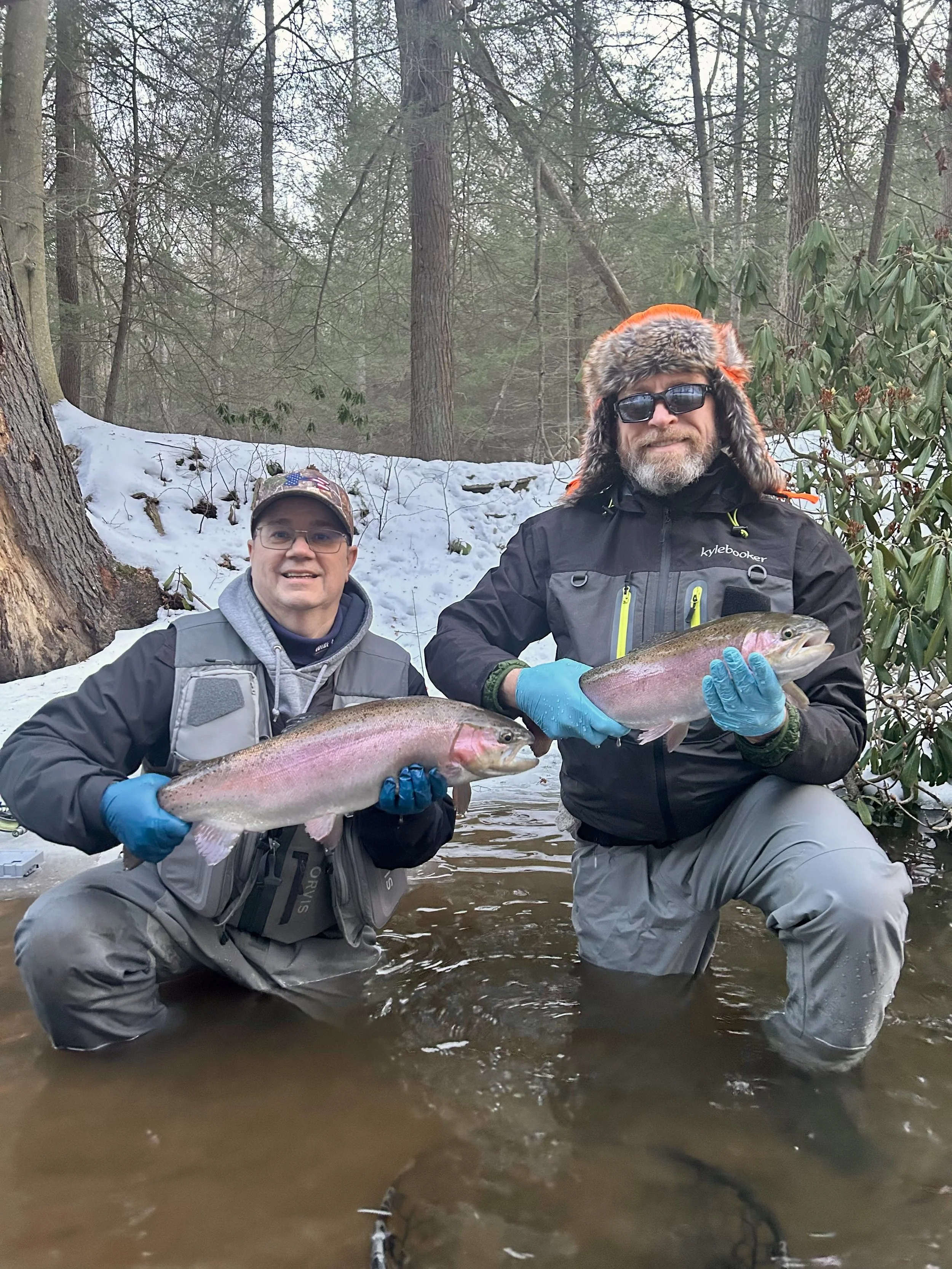
Clean drifts when others are not on the water can yield great results, even if we can’t feel our fingers & toes!
Especially for beginners or when tackling new waters, having confidence is so important, maybe the most important. When anglers are not confident, they fish far too fast and change flies too frequently. Rarely will that help. You will also miss fish because you are unprepared for an eat, because you have lost faith in your approach. Enter each fishing session with deliberate intentions, make confident drifts with proven patterns. Once you have built that confidence you can begin working outside your comfort zone to grow your knowledge base.
I carry 5 confidence patterns, that are tested nationwide and I feel every drift could get bit. I recommend creating your personal confidence arsenal and always starting there. Confidence amplifies success, and we all want to be successful!
It is my hope that these tips and tactics will assist you in your next adventure and lead to increased success. Tight lines!
About Bobby Kish

When not on a trout stream, Bobby Kish can normally be found chasing the fish of 10,000 casts, musky!
Bobby Kish, also known as #FishWithKish, is a licensed Pennsylvania trout guide, custom fly tier, and avid musky angler. From 2-weights on trout streams to 12-weights in the musky boat, Bobby loves sharing what he’s learned and helping anglers improve. He’s a Trout Unlimited member and serves on the board of Muskies Inc.
Interested in fishing with Bobby? Use the form below to ask about availability, or reach him at: fishwithkish@gmail.com
Read more from Bobby in Why Use a Guide